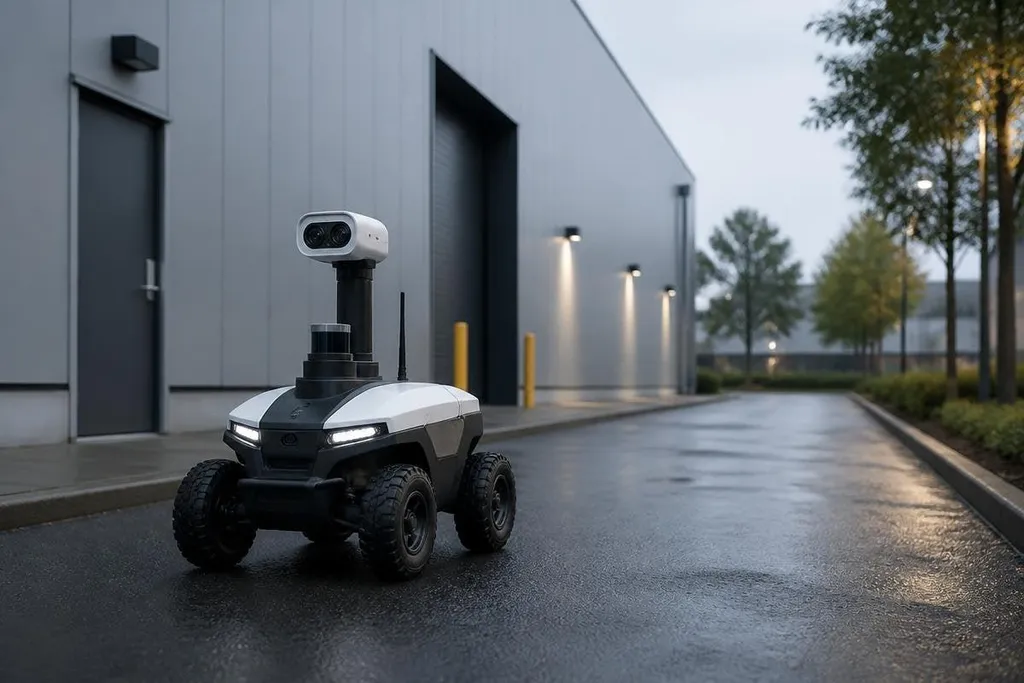
Security robots can patrol areas that fixed cameras cannot see and send staff a live view when something needs attention. Their value comes from repeated observation, not from replacing every guard on site.
The question for a security manager is practical: can a robot cover more ground, reduce risky checks, or give people better information before they act?
- Mobile patrols can inspect routes that fixed cameras miss.
- Cameras, thermal sensors, and LiDAR give staff more than one view of a scene.
- A robot still needs clear rules, human review, charging, and service.
Why fixed security tools leave gaps
A fixed camera watches one position. It may cover a door, loading bay, or fence line, but it cannot check what sits behind a vehicle or around a temporary barrier. A mobile robot can move through those areas and send images back to a control room.
That movement changes the job. Staff can use the robot for routine patrols while they handle alarms, visitors, incidents, or tasks that need judgment. The benefit comes from shifting time, not from removing people from the process.
A robot can also repeat the same route at set times. That gives a site a more regular record of open gates, blocked paths, water on a floor, or equipment left in an unusual place. The system still needs a person to decide what each finding means.
What the robot actually does
A security robot usually combines several parts. Cameras record visible scenes, thermal sensors show heat differences, and LiDAR measures distance to build a map of nearby objects. The robot uses that information to move along a planned route and report changes.
The useful output is a message with context. A camera may show an open door, while the robot's position and map show that the door sits on a restricted route. That gives the guard more to work with than a short alarm tone from a fixed sensor.
Some sites may also connect the robot to existing access control, alarm, or video systems. That connection can reduce the number of screens staff must watch, but it adds setup work and another point to test when the system changes.
A patrol robot that connects to alarms still needs proof that its alerts reach the right person. Reports on security robots from Robot24.com can tie those claims to a named machine, test site, date, and stated limit before the next section examines where the system can fail.
Where the limits show up
A robot cannot decide that a person is dangerous from one image alone. Lighting, rain, dust, reflections, crowds, and parked objects can affect what its sensors report. A false alarm still costs staff time, and a missed event still needs a clear response plan.
The site itself matters. Narrow paths, steps, loose cables, poor network coverage, and locked doors can stop a patrol. Charging also needs a place, a schedule, and a person who checks that the robot is ready for the next route.
Privacy needs a written rule before the first patrol begins.
Decide where cameras may point, how long recordings stay stored, who can view them, and what happens when a person asks about the footage. These choices belong in the security plan, not after installation.
I’d skip a security robot if the site cannot assign people to review alerts and maintain the route.
A buying checklist for security managers
Use these checks before asking for a price:
- Map the route: mark doors, gates, blind spots, steps, and areas the robot cannot reach.
- Name the response: state who receives an alert and what they do next.
- Check the sensors: list the scenes that need visible cameras, thermal readings, or distance data.
- Plan the service: set out charging, cleaning, software updates, repairs, and manual recovery.
- Set privacy rules: record camera zones, storage time, access rights, and deletion steps.
- Run a small trial: measure missed alerts, false alarms, route stops, and staff time before a wider purchase.
A security robot earns its place when it gives staff better information during routine patrols and real incidents. The next useful test is simple: after a trial route, can the team show fewer blind spots without adding more alert work than it can handle?